MutaSight
Molecular Modeling applied to Precision Oncology
Discover how molecular modeling and bioinformatics tools are revolutionizing cancer treatment by enabling precise analysis of tumor mutations.
Discover how molecular modeling and bioinformatics tools are revolutionizing cancer treatment by enabling precise analysis of tumor mutations.
Faced with cancer, many questions may arise, often without clear or accessible answers.The information available are sometimes complex or difficult to understand. Here are a few key concepts to help you better understand this disease.
It is characterized by an abnormal proliferation of cells in a tissue. Each cancer is unique because of its molecular specificities, even between two people with the same type of cancer.
It is a cluster of cells resulting from the abnormal proliferation of a cancer cell. It can contain billions of cells. Occasionally, some break off and invade other parts of the body, forming metastases.
It is a modification in a DNA sequence, the carrier of our genetic information.Certain mutations can affect cell function, leading to abnormal or even pathogenic behavior.
Thanks to advanced analyses, doctors can detect the mutations that cause cancer to develop and focus treatment on these targets.
Precision oncology aims to offer treatments tailored to each patient, targeting specific tumor characteristics.
Thanks to advanced analyses, doctors can detect the mutations that cause cancer to develop and focus treatment on these targets.
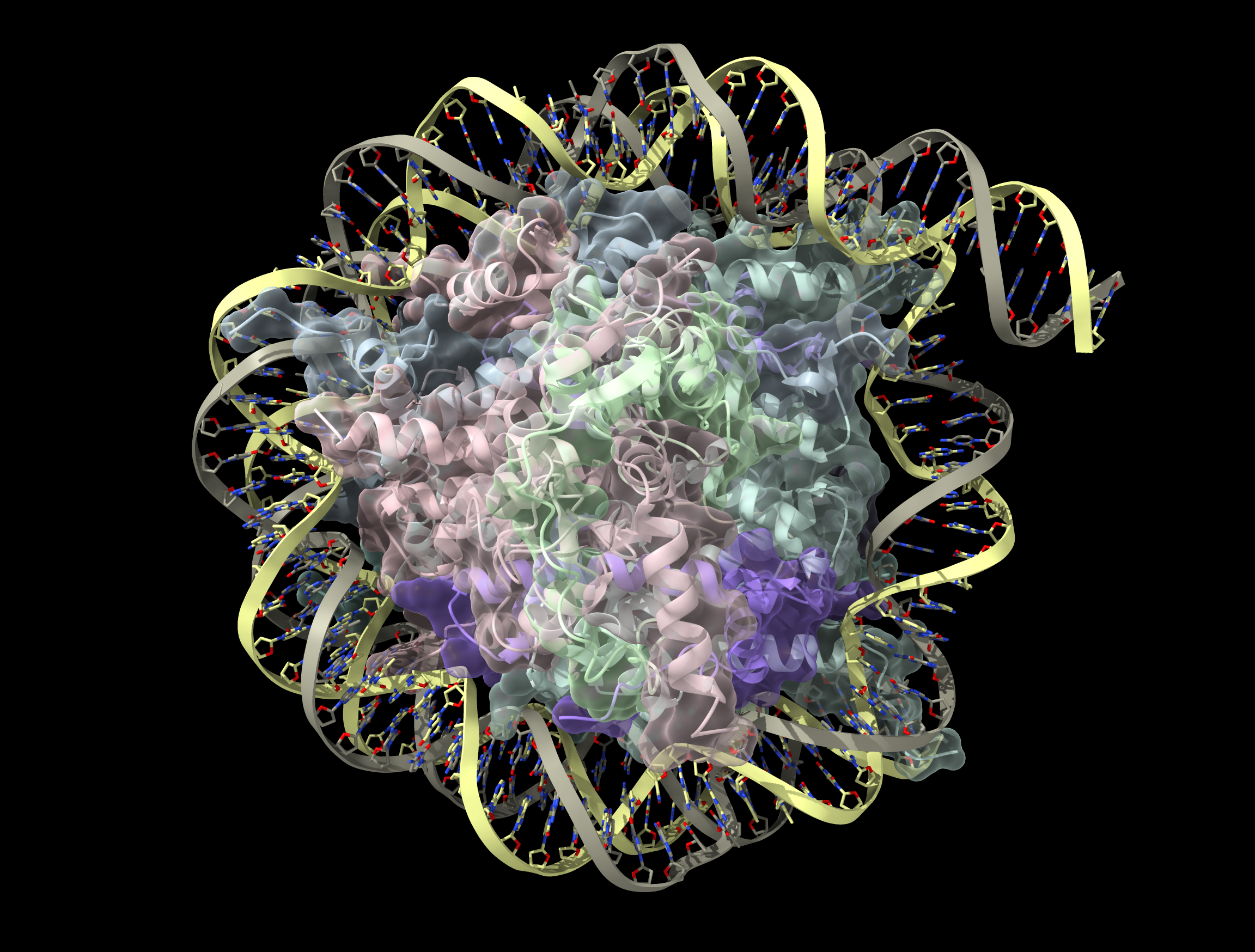
A protein is a giant molecule made up of a succession of amino acids, the basic building blocks of life. It plays an essential role in the body, such as cell repair, regulation of biological processes or defense against infection. Each protein has a specific form and function, determined by the number and sequence of its amino acids.
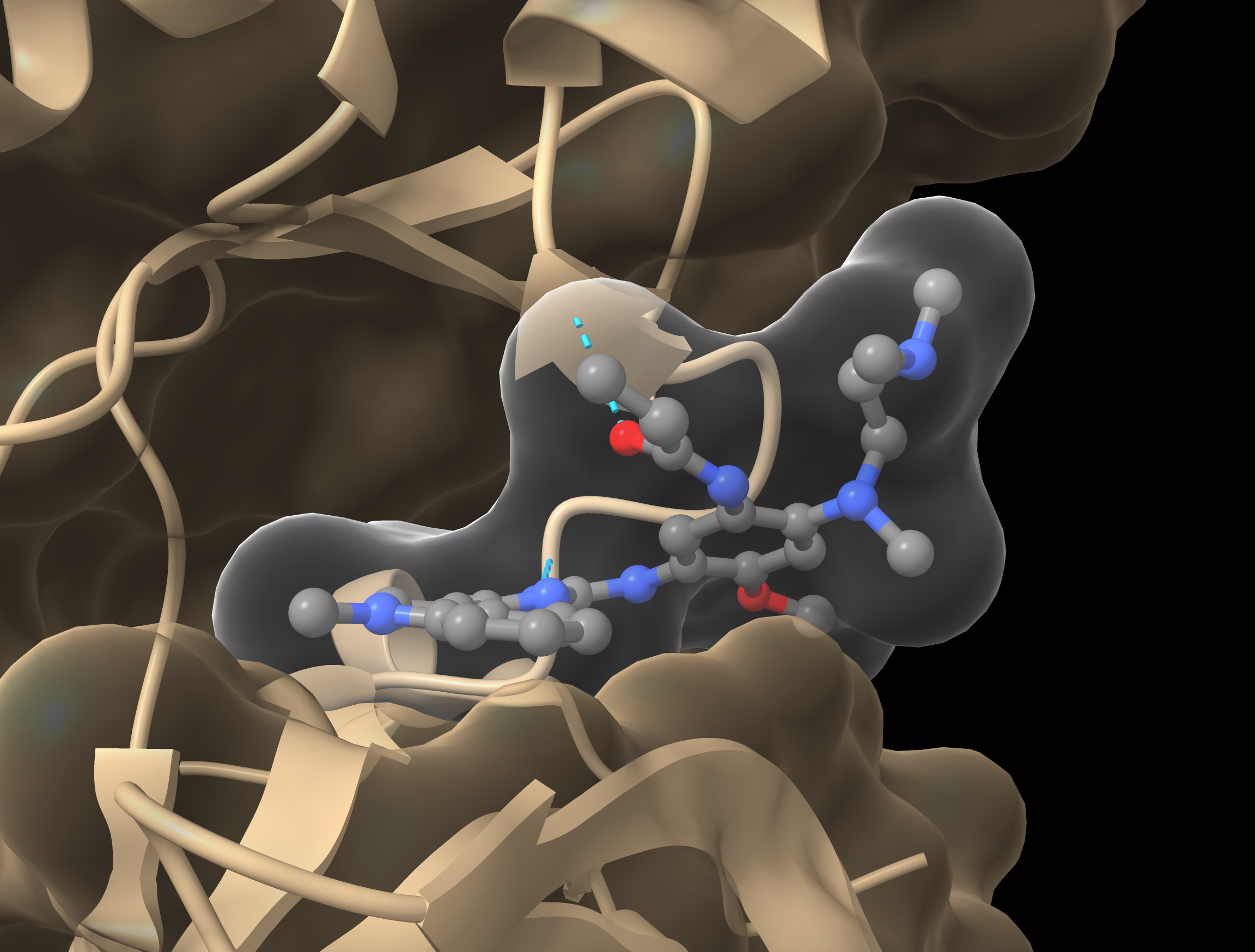
Molecular modeling is a computational method used to understand how proteins and other molecules, such as drugs, interact with each other. It involves, among other things, analysis of the three-dimensional structures of proteins, enabling us to understand the interactions between amino acids or with other molecules likely to interact with them.
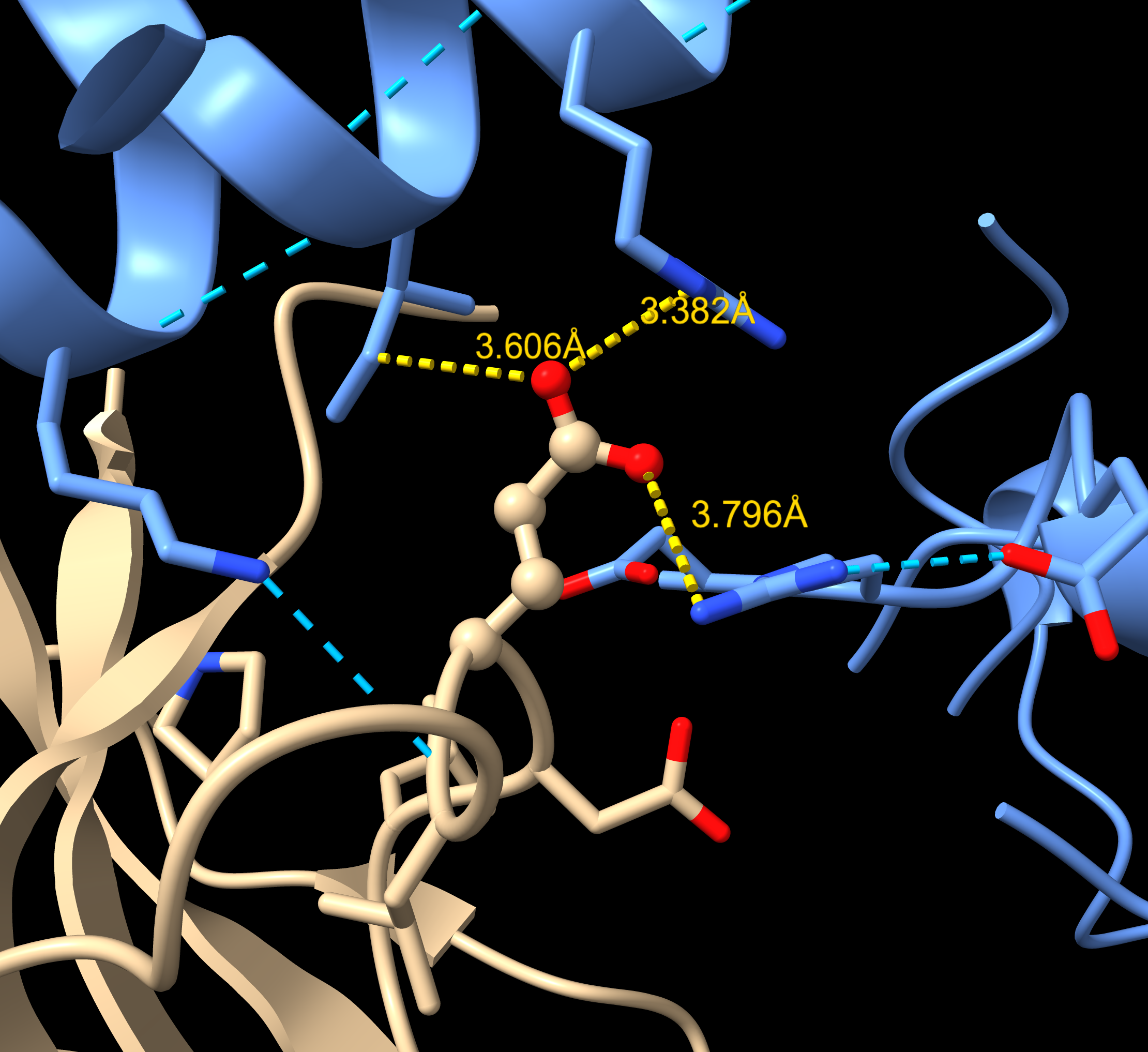
A mutation can change the number and sequence of amino acids in a protein.Thanks to structural analyses, we can predict the effects of these changes on the protein's shape, function and ability to interact with molecules in its environment, such as drugs.
Let's take the example of a patient suffering from a rare and aggressive cancer that developed in the pigment cells of the eye: uveal melanoma. This tumor was not responding sufficiently to standard treatments, which led the oncologist treating the patient to present his case at a specialized symposium, the Molecular TumorBoard (MTB). This committee brings together experts from different fields (oncologists, pathologists, bioinformaticians, geneticists, etc.) to discuss complex cases.
Prior to this meeting, genetic analyses of the tumor were carried out, revealing the presence, in the cancer cells, of mutations unknown in the scientific literature. Understanding the effect of these mutations could help guide the choice of treatment. A molecular modeling analysis was therefore carried out to predict the potential impact of these mutations on the behavior of proteins, and hence of cells. The results showed that these mutations could probably induce abnormal cell behavior, favoring cancer proliferation. Based on these analyses, the oncologist was able to propose a personalized treatment, specifically targeting the anomalies detected in the tumor, leading to beneficial effects for the patient and an improvement in his condition.
Details of this case have been published in a scientific journal available
here
Trametinib Induces the Stabilization of a Dual GNAQ p.Gly48Leu- and FGFR4
p.Cys172Gly-Mutated Uveal Melanoma. The Role of Molecular Modelling in Personalized Oncology
Fanny S. Krebs et al. Int. J. Mol. Sci. 2020, 21, 8021.
Abstract. We report a case of an uveal melanoma patient with GNAQ p.Gly48Leu who responded to MEK inhibition. At the time of the molecular analysis, the pathogenicity of the mutation was unknown. A tridimensional structural analysis showed that Gαq can adopt active and inactive conformations that lead to substantial changes, involving three important switch regions. Our molecular modelling study predicted that GNAQ p.Gly48Leu introduces new favorable interactions in its active conformation, whereas little or no impact is expected in its inactive form. This strongly suggests that GNAQ p.Gly48Leu is a possible tumor-activating driver mutation, consequently triggering the MEK pathway. In addition, we also found an FGFR4 p.Cys172Gly mutation, which was predicted by molecular modelling analysis to lead to a gain of function by impacting the Ig-like domain 2 folding, which is involved in FGF binding and increases the stability of the homodimer. Based on these analyses, the patient received the MEK inhibitor trametinib with a lasting clinical benefit. This work highlights the importance of molecular modelling for personalized oncology.